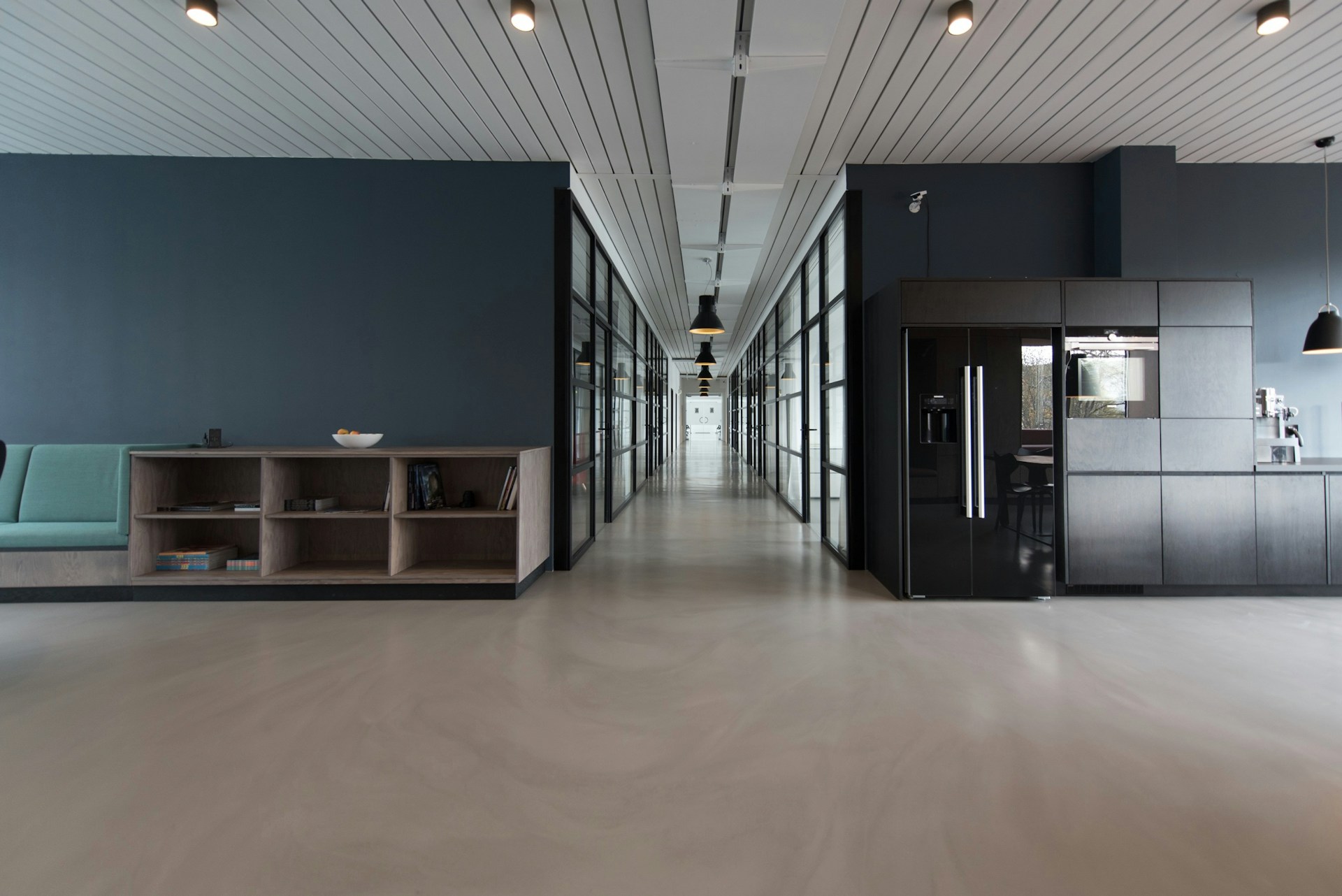
Construction and renovation dust is different from everyday dust — it's finer, it travels further, and it settles into places most people never think to check. Before a newly built or renovated space is handed over, it's worth working through it systematically rather than cleaning "until it looks fine."
Start high and work down. Ceiling corners, light fixtures, and the tops of door frames collect fine dust that will simply fall back onto freshly cleaned floors if you leave them until last. The same applies to air conditioning vents and ceiling fans, which are easy to forget but circulate dust throughout the room the moment they're switched on.
In the kitchen, every cabinet — inside and out — needs wiping before anything goes back in, since fine dust settles inside closed cabinets more than people expect. Check behind and underneath appliances if they've been moved, and clean extractor fan filters, which trap construction dust particularly well.
Bathrooms need attention to grout lines and tile joints, where dust and cement residue bind into a paste that's much harder to remove once it dries fully. Fixtures should be checked for the protective film or residue that plumbing and tiling work often leaves behind, which doesn't come off with a standard wipe-down.
Windows and window tracks are one of the most commonly missed areas. Tracks collect construction debris that gets ground in every time the window opens and closes, and glass often has a haze from drywall dust or paint overspray that needs a proper glass-cleaning pass, not just a dusting.
Finally, floors should always be the last step, done in two passes: a thorough dry pass to lift grit that would otherwise scratch the surface, followed by a wet clean appropriate to the flooring material — tile, wood, and marble each need different products. Skipping the dry pass is the single most common mistake in post-construction cleanups, and it's what causes fine scratching that only becomes visible weeks later. A methodical room-by-room approach takes longer than a quick once-over, but it's the difference between a space that looks move-in ready and one that reveals dust in every corner a week later.